All About Electrolytes!
Sports drinks and powders promising to restore your electrolyte balance are everywhere in the mainstream market. But truthfully, most people don’t know what it even means to restore electrolytes in their body, or what they do in the first place. Yet somehow, they’re buying these products in the hopes that it does, well, something? Before you race out to get the newest electrolyte product, read on to find out what electrolytes actually are, how they function, and whether or not you might benefit from supplementing them through a drink or other product.
What are electrolytes?
Electrolytes are essential minerals that are naturally occurring in the body (think: sodium, potassium, magnesium, and calcium). Electrolytes are consumed through diet, mainly-especially if you eat a whole food rich diet that contains many kinds of fruits and vegetables.
Their main function is to maintain electrical neutrality in cells, which aims to regulate nerve and muscle function. They get their name from the electric charge that they carry, which when dissolved in fluids like blood, signals the muscles and nerves in our bodies. So yeah, they are pretty essential for keeping us alive.
They are also essential for functions such as keeping heart rhythm stable, keeping you hydrated, and making sure muscle and brain function are running smoothly, and regulating blood pressure and blood glucose. There are health risks when your electrolyte levels are imbalanced. Things such as seizures, muscle weakness and cramps, irregular heartbeat, and nausea can occur, and the chance of developing chronic health conditions such as thyroid dysfunction, and heart and kidney diseases can increase.
Electrolyte Supplements: Necessary or Not?
Your body does a pretty good job at balancing fluids and keeping electrolyte levels stable. However, some people may benefit from intaking an electrolyte powder or drink-but it isn’t required for most. However, here are some situations that might make sense for you to consume a product with added electrolytes:
If you engage in high intensity, long durations of exercise. Think: long distance running, biking, fast-paced sports like soccer, etc. The average 60 min of lower-intensity steady state cardio or weight-training probably doesn’t require an intake of electrolyte supplements for most (it is, however, person dependent, so make that judgement call for yourself).
Being outside in the heat for prolonged periods and sweating excessively. For example, if you work an outdoor, physically demanding job, or it’s summer and you spend all day in the sun sweating your buns off working for some tan lines.
After periods of diarrhea, vomiting, or other illness that resulted in a huge loss of fluids in the body.
If you had a few too many margaritas and are nursing a hangover. Ideally, have an electrolyte drink before bed instead of the next morning. It won’t cure you but it might make the headache and dehydration symptoms a little better the next day.
Too Much of a Good Thing?
Unfortunately, overdoing it in electrolyte consumption can have some negative consequences. While electrolytes are essential, and replenishing them through supplementation or beverages in certain situations is helpful, too much can cause some serious issues. Overconsuming electrolytes can lead to headaches, nausea, fatigue, difficulty breathing, and in more extreme cases, strain on your heart and kidney functions leading to issues like irregular heart rhythms and seizures. I
Key Takeaways
Electrolytes serve essential functions in the body. Typically, enough of them are consumed through diet, and don’t deplete enough to require supplementation unless you’re sweating a ton through exercise, in the sun a lot, or have been sick and lost a significant amount of fluids in a short amount of time.
Sources:
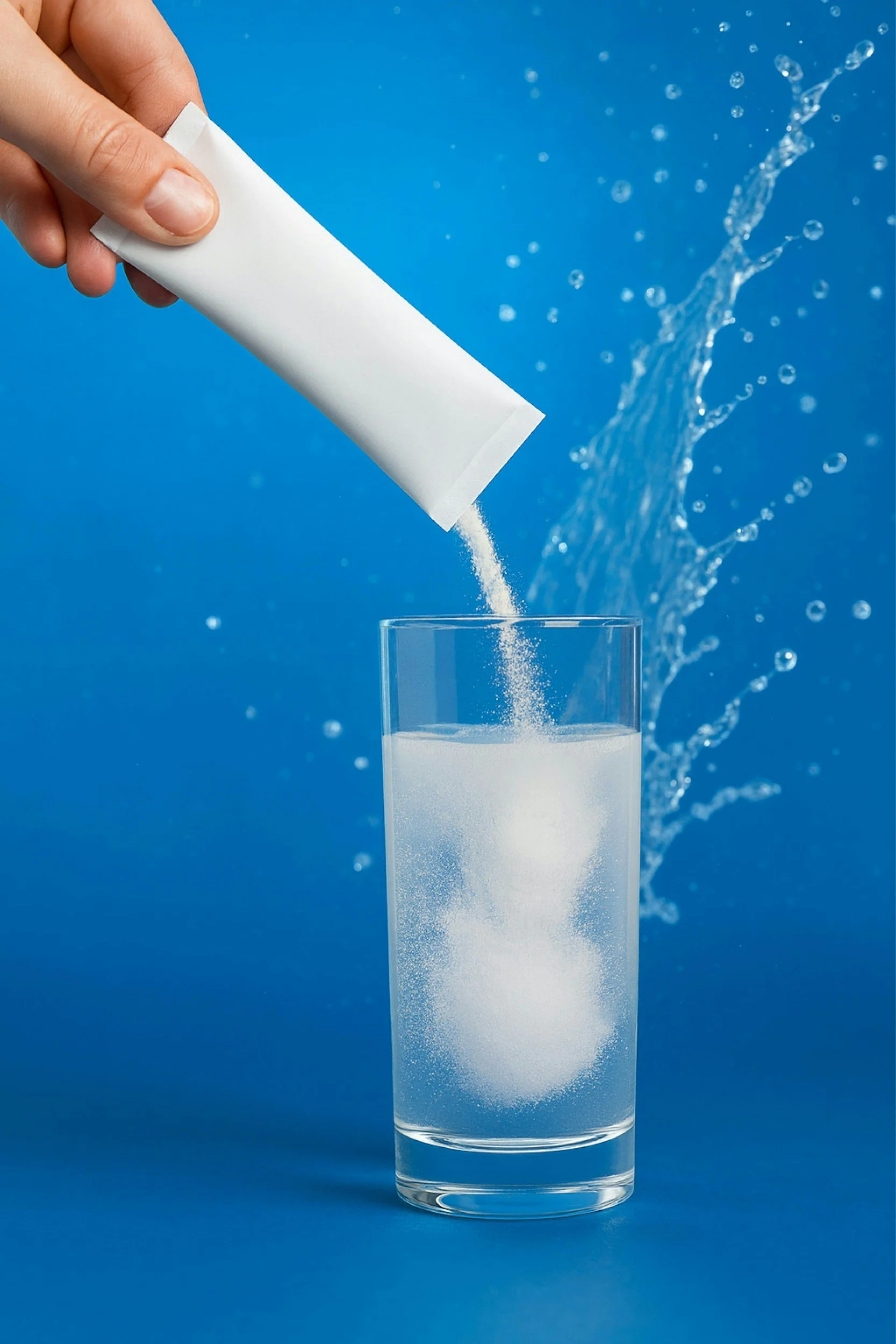
Image Description: A clear glass is in the center. A hand tilts a small white packet, pouring a fine stream of electrolyte powder into the water. The powder disperses in swirling wisps; bubbles rise as the liquid fades to a pale tint matching the packet.